
Plan Building Repairs Before the Monsoon — Not During It
A practical calendar for Mumbai and Thane societies: when to audit, tender, and execute so waterproofing and RCC repairs are not rushed into the rains.
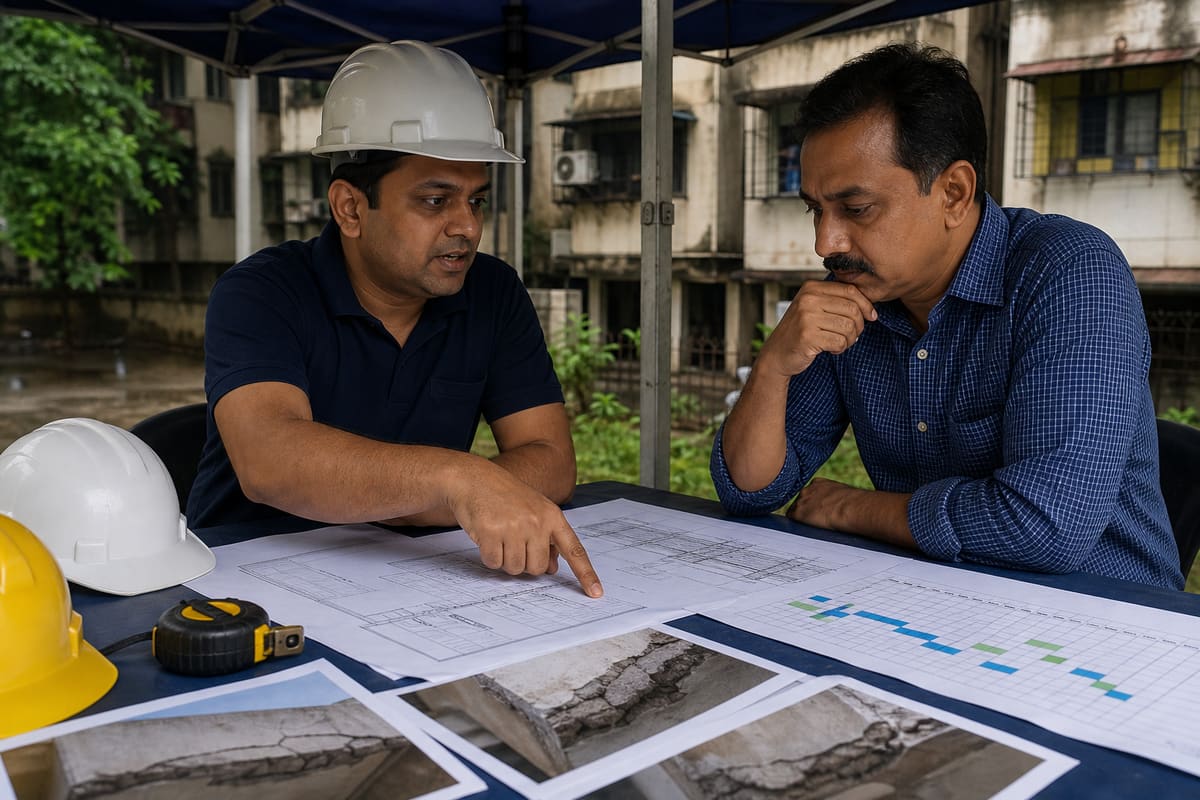
Every year, the same scramble plays out across housing societies in Mumbai and Thane. Leakage complaints peak in July, contractors are booked solid, and committees approve emergency patches that cannot cure properly in wet weather. By September the stains return — and so does the argument about who wasted society funds.
Monsoon is not the enemy. Late planning is. Buildings that stay drier through the rains are usually the ones whose committees treated repair as a seasonal programme, not a panic reaction when water entered a bedroom.
Use the dry months for diagnosis, not decoration
October to February is when structural audits, defect mapping, and trial patches create the most value. Surfaces are accessible, NDT readings are more reliable, and engineers can photograph distress without fighting constant seepage. That baseline becomes the BOQ and method statement you will tender against — not a vague list of “external plaster and waterproofing.”
Societies that skip this window often discover mid-tender that balcony upturns, podium joints, or corroded stirrups need structural treatment first. Those late discoveries inflate cost and compress the remaining dry season until quality becomes optional.
Tender early enough for real competition
Competent specialized repair contractors plan crews months ahead. If your society floats tenders in May, you will compare whoever is still available — not the teams best suited to your distress pattern. Target tender completion by March so mobilisation, scaffolding, and material approvals finish before peak heat and before pre-monsoon humidity rises.
Ask bidders for a monsoon contingency clause: temporary protection, staged wing closures, and stop-work criteria when rainfall prevents curing. A contractor who cannot articulate that plan is not ready for coastal Maharashtra conditions.
Sequence work so critical envelopes finish first
Prioritise terraces, podiums, external walls facing prevailing rain, and junctions that feed seepage into RCC. Cosmetic elevation painting can wait; water paths cannot. G.K.S programmes typically phase by risk — structural and waterproofing hold points first — so the building enters June with the highest-exposure surfaces closed out.
Occupied repairs need access planning with residents. Quiet hours, debris routes, and temporary waterproofing at open patches should be written into the programme, not negotiated after the first complaint call.
What to do if you are already late
If rains have started and distress is active, focus on safety and temporary measures — not full-system waterproofing that will fail in wet application. Document the interim works, protect interiors, and schedule a proper investigation-led package for the next dry season. Repeating last year’s rushed coating is how societies fund the same elevation every monsoon.
If your committee wants a dry-season programme — audit, BOQ, tender support, and supervised specialized repair — request a consultation now, while there is still calendar left to do the work correctly.
Related service
Explore our Building Repair Consultancy offering for societies and project teams across Mumbai and Thane.
Discuss your project
Need help with a structural audit or repair plan?
Our engineers support housing societies, developers, and facility teams across Maharashtra and India.